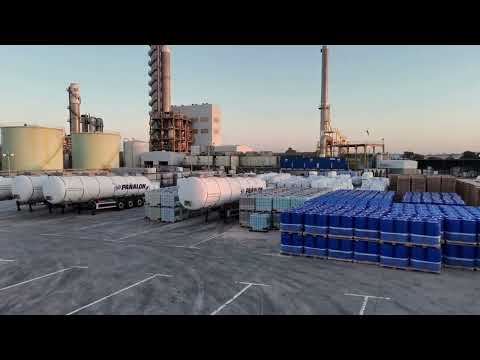



More than 50 years manufacturing resins
Ercros began its operations in the field of resins in 1969 as the group Formaldehído y Derivados, S.A.
Over the course of more than 50 years, we have continuously innovated this family of products, enhancing both their properties and their sustainability. Technological advancements driven by our R&D and Engineering departments have enabled us to offer an extensive portfolio of high-performance industrial resins.
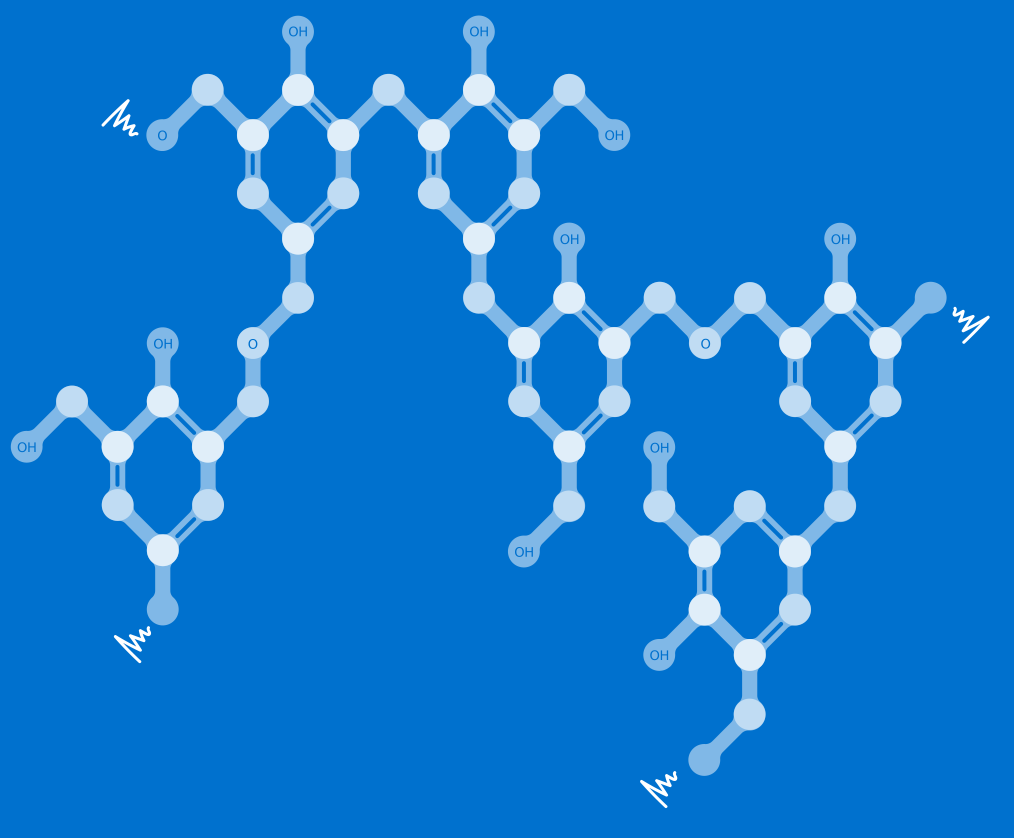
Key application sectors include wood and furniture, insulation, and the impregnation of paper, as well as mineral or synthetic fibers. Our portfolio comprises phenol-formaldehyde, urea-formaldehyde, melamine-formaldehyde, melamine-urea-formaldehyde, and modified melamine-formaldehyde resins.
Ercros provides complete adhesive systems for these resins, including hardeners, additives, and formaldehyde scavengers.
We have also developed new resins, which are featured under our ErcrosGreen+ and ErcrosTech brands:
- The ErcrosGreen+ brand encompasses resins manufactured using a new technology that reduces formaldehyde emissions by 90% compared to previous levels, achieving ultra-low levels comparable to those found in natural wood. These resins were developed entirely by the R&D department of the intermediate chemicals division—based at the Tortosa plant—and comply with the strictest standards and recommendations for the construction sector in Europe, the United States, and Japan. They also offer an added benefit in terms of sustainability, as they are derived from the most sustainable raw materials.
- Under the ErcrosTech brand, we offer a range of high-performance technical products that provide customized solutions for every application. These products are tailor-made and designed to meet the specific needs of each client.

ErcrosGreen+ resins

What are they used for?
The ErcrosGreen+ family includes a wide range of resins and adhesives that are mainly used for wood and furniture manufacturing; insulation; and impregnation of paper, mineral and synthetic fibres. Each variety of resins is especially suitable for the following specific applications.
Urea-formaldehyde (UF) resins:
- Particleboard and plywood
- Laminating
- Impregnation
- MDF
Melamine-urea-formaldehyde (MUF) resins:
- Moisture-resistant particleboard
- Fibers
Melamine-formaldehyde (MF, modified MF) resins:
- Laminating
- Impregnation
- Postformable laminates
- Superplasticizers
Phenol-formaldehyde (PF) resins:
- Plywood
- Fiber impregnation
- Paper impregnation


They offer excellent adhesion to wood and can be formulated using raw materials from renewable sources
Ercros offers urea-formaldehyde (UF) resins—specifically LEF (low formaldehyde emission) and ULEF (ultra-low formaldehyde emission) grades—that comply with European standards E0 and E1/2, as well as the California Air Resources Board (CARB) standards, phases 1 and 2.
Due to their high reactivity, low cost, and excellent adhesion to wood, UF resins are used for:
- For the manufacture of particleboard: boards are produced for interior applications (furniture, cabinets, doors, and insulation) that meet strict emission standards, such as class E0 or CARB Phase 2.
- For the manufacture of plywood: plywood panels are produced for wall, ceiling, and floor coverings, as well as for furniture and cabinets; their very low formaldehyde content allows them to comply with strict CARB Phase 2 emission standards.
- For lamination: paper impregnation processes are used to create laminates with a very low formaldehyde content.
- For impregnation: UF (urea-formaldehyde) resins are used to produce molding powders for the manufacture of a wide range of products with very low emissions.
- For the manufacture of fiberboard: very low-emission fiberboard (MDF) is produced, which complies with the most stringent regulatory standards.
At the client's request, the formulation can incorporate raw materials from renewable sources, thereby contributing to the development of a material with a lower carbon footprint.
Urea-Formaldehyde (UF) resin varieties and characteristics
LEF: low emission formaldehyde; ULEF: ultra low emission formaldehyde; y CARB: California Air Resources Board, phases 1 and 2.

They combine excellent moisture resistance with the possibility of incorporating raw materials from renewable sources
ErcrosGreen+ melamine-urea-formaldehyde resins are characterized by high moisture resistance and low formaldehyde emissions; they are primarily used in the production of moisture-resistant particleboard and fiberboard.
- Moisture-resistant particleboard: using these resins, we can produce boards intended primarily for indoor use that require high resistance to water and humidity.
- Moisture-resistant fiberboard: for the manufacture of fiberboards with resistance to humidity, such as those used in the flooring sector.
Ercros offers melamine-urea-formaldehyde (MUF) resins with low formaldehyde emissions (LEF, ULEF) that meet the most stringent standards (European E0 and E1/2 regulations, as well as CARB standards). Furthermore, they can be formulated using raw materials from renewable sources to reduce their carbon footprint.

Moisture resistance, thermal stability, and sustainability in a single product
Melamine resins are characterized by high moisture resistance and are primarily used in laminates and for paper impregnation. This category includes melamine-formaldehyde (MF) resins, which are used to manufacture laminate flooring and natural laminates, as well as modified melamine-formaldehyde (MFM) resins. The latter are designed for paper impregnation where high post-formability is required—essential for end-use applications involving very tight radii of curvature, such as certain types of molding—and for other specialized applications, including the production of superplasticizers.
Ercros offers LEF (low formaldehyde emission) and ULEF (ultra-low formaldehyde emission) melamine resins, which meet the standards set by European regulations and the California Air Resources Board (CARB) Phase 1 and Phase 2 requirements (classified as E0 and E1/2).
- Lamination: enables the production of laminated panels for kitchens and bathrooms with very low formaldehyde emissions.
- Impregnation: MF resins are used to produce molding powders for the manufacture of tableware and kitchen utensils that meet the strictest standards.
- Post-formable laminates: manufactured using modified melamine resins with very low formaldehyde emissions and designed to meet specifications for very tight bending radii.
- Superplasticizers: modified melamine-formaldehyde (MF) resins, developed specifically as additives for the construction and ceramics sectors.
Optionally and upon request, the formulation can incorporate components of renewable origin, reinforcing a commitment to sustainability and the reduction of the carbon footprint.
Varieties and characteristics of melamine-formyl resins (MF)
LEF: low emission formaldehyde; ULEF: ultra low emission formaldehyde; y CARB: California Air Resources Board, phases 1 and 2.

Formulated for performance and sustainability
Ercros offers phenol-formaldehyde (PF) resins in LEF (low formaldehyde emission) and ULEF (ultra-low formaldehyde emission) grades, classified as E0 and E1/2 according to European standards and CARB (California Air Resources Board) phases 1 and 2.
The high stability and water resistance of these PF resins provide highly advantageous properties for the manufacture of plywood, as well as for the impregnation of paper and fibers—including both glass and polyamide fibers.
- Plywood: for the manufacture of plywood panels intended for interior use, humid environments, or demanding outdoor conditions (such as marine-grade plywood), as they comply with E0 standards.
- Fiber impregnation: for the production of abrasive or insulating systems, thanks to the material's properties and its low free-formaldehyde content.
- Paper impregnation: for the manufacture of high-pressure laminates subject to very strict formaldehyde emission requirements.
The adaptable formulation allows for the integration of renewable raw materials to foster more sustainable solutions, reducing the carbon footprint.
Varieties and characteristics of phenol formaldehyde resins (PF)
LEF: low emission formaldehyde; ULEF: ultra low emission formaldehyde; y CARB: California Air Resources Board, phases 1 and 2.
Request for information
If you would like more information about this product or want to contact our technicians, you can do so here.

Certifications
Ercros certifies the quality, safety and environmental friendliness of the manufacture of this product, and is adhered to voluntary agreements that endorse its commitment to CSR and customer service.


Further information
To find out more about this product, you can visit the following links.